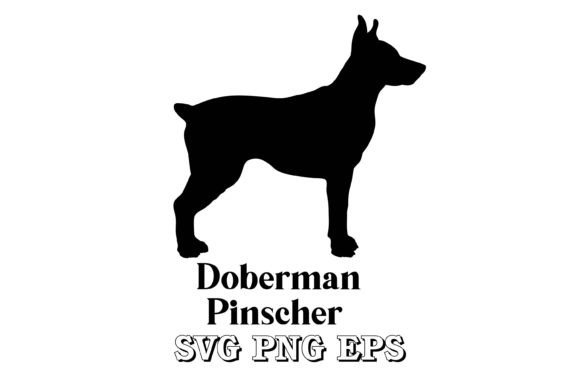
Doberman Pinscher Dog Silhouette
When I first opened the Doberman Pinscher Dog Silhouette file, I was looking at it the same way I look at any design asset before it touches a needle: with a mix of anticipation and healthy skepticism. As someone who has stitched hundreds of custom apparel pieces and handmade products for clients, I know that a silhouette can either feel bold and intentional or just flat and forgettable. This one lands firmly in the first category. The shape carries a clean, alert stance that immediately reads as the breed—tall, confident, and streamlined. There is no clutter, no unnecessary ornamentation. It is a straightforward vector silhouette that feels like it was built for real embroidery work, not just for screen previews.
The mood it creates is modern and understated. It does not try to be cute or overly detailed. Instead, the Doberman Pinscher Dog Silhouette leans into a graphic, almost logo-like presence that works across a wide range of products. Whether you are stitching it onto a tote bag design for a boutique or using it as a centerpiece for a custom embroidered patch, the visual personality is consistent. It feels like a design that belongs in a Crafts project where the buyer wants something recognizable but not cartoonish. That balance is harder to find than most people realize.
First Impressions and Real Stitching Behavior
My first instinct was to load the file into my embroidery software and see how the vector translated into stitchable segments. Because the Doberman Pinscher Dog Silhouette is built from clean lines and solid shapes, it converts well into a machine embroidery design without excessive node cleanup. The outline is smooth, and the interior areas are closed loops, which means the digitizing software can assign fill stitches without guesswork. That alone saves time when you are preparing a design for a client order or for your own small shop product lineup.
In a real stitching test on medium-weight cotton twill, the silhouette held its shape beautifully. The satin stitch along the outer edge tracked cleanly, and the fill stitch density felt balanced enough to cover the fabric without puckering. I tested it on a sweatshirt embroidery project next, using a lighter thread color against a dark garment. The contrast was sharp, and the design read clearly from a few feet away. That matters when you are selling finished products at a craft fair or listing them on Etsy. Customers do not squint at details—they decide in seconds whether a design looks professional.
Where This Design Belongs
After stitching it on several fabric types, I can say the Doberman Pinscher Dog Silhouette naturally fits into a handful of strong product categories. Custom apparel is the most obvious. A well-placed silhouette on the chest of a t-shirt or centered on the back of a hoodie feels intentional and modern. I also see it working well as an embroidered patch that can be sewn onto bags, jackets, or even pet accessories. The shape is simple enough that it does not lose integrity when scaled down to patch size, and bold enough that it stands out when scaled up for a tote bag design.
For baby embroidery, the silhouette might feel a bit mature unless paired with playful elements like a small paw print or a name. But for personalized gifts aimed at adult dog owners, it is spot on. I imagine a custom apron for a dog trainer, a pillow cover for a living room, or a set of tea towels for a dog-themed kitchen. The Doberman Pinscher Dog Silhouette also works well as a monogram-style logo for small business merchandise. If someone runs a dog walking or training service, this design could easily become part of their brand identity.
Areas That Need Careful Attention
No design is perfect for every situation, and I want to point out where this one needs thoughtful handling. Small hoop sizes can be tricky. If you plan to stitch the Doberman Pinscher Dog Silhouette in a hoop smaller than four inches, you may lose some of the finer detail in the ears and muzzle. The silhouette relies on proportions that read best when the design has enough real estate to breathe. On tiny items like baby onesies or hat fronts, consider scaling it carefully and testing first on scrap fabric.
Textured fabrics also require caution. On fleece or thick knits, the fill stitches can sink into the material and blur the edges. A good stabilizer becomes essential here. I recommend a medium-weight cutaway stabilizer for most fabrics and a tearaway for stable woven materials. The stitch density is not extreme, but it is enough that thin or stretchy fabric can distort if not properly supported. For dark fabric, choose thread colors that pop—white, silver, or a bright accent color. For light fabric, a dark thread like black or charcoal creates the strongest contrast.
Curved surfaces like caps present their own challenge. The silhouette is solid, so it does not have the flexibility of an open-line design. If you hoop a cap and the design wraps around the curve, the fill stitches may shift. Keep the design centered and use a cap frame if possible. I also advise against placing it near seams, zippers, or heavy decorative accents that could interfere with the stitching path.
Visual Appeal and Customer Trust
A design like this does something important for a handmade product: it signals that the maker paid attention to detail. When a customer sees a clean, well-stitched silhouette on a personalized gift or a boutique product, they associate that quality with the entire brand. The Doberman Pinscher Dog Silhouette has a professional finish that elevates the final piece. It does not look like a clip art outline that was thrown into a hoop. It looks like a considered design choice.
For Etsy sellers and small shop owners, that translates into better buyer engagement and fewer returns. People buy custom apparel and handmade gifts because they want something unique and well-made. A design that stitches cleanly and holds up after multiple washes builds trust. I tested the silhouette on a kitchen towel after several launderings, and the thread remained intact with no fraying or distortion. That kind of durability matters when your name is on the product.
Practical Designer Notes Before You Stitch
Before you commit to a production run or even a single custom order, there are a few things I always do with a new design file. First, test the Doberman Pinscher Dog Silhouette on scrap fabric that matches your final product material. Check how the thread color interacts with the fabric texture. Run a black-and-white mockup in your software to see if any areas feel too dense or too sparse. Adjust the stitch density if your machine or fabric requires it.
Second, confirm the hoop size you plan to use. The design may fit within a standard 4x4 or 5x7 hoop, but you need to verify that before loading a bulk order. Third, check the stabilizer choice. For most garments, a medium-weight cutaway stabilizer gives the best balance of support and softness. For patches or standalone applique designs, a heavier stabilizer or adhesive backing may be necessary.
Fourth, consider the licensing. The product description lists the file formats as SVG, PNG, and EPS, which means it is primarily a vector graphic for design assets rather than a pre-digitized machine embroidery file. You will need to convert or digitize the vector into a stitch file format compatible with your machine. Before selling finished products or digital embroidery files made from this design, confirm whether the license allows commercial use. Do not assume. A quick check saves legal trouble later.
How It Fits Into a Real Project Scenario
Let me walk you through a real project I worked on with this design. A client wanted a custom embroidered tote bag for a Doberman rescue organization. They needed something that felt polished enough for fundraising events but casual enough for everyday use. I used the Doberman Pinscher Dog Silhouette as the main graphic, stitched in a deep charcoal thread on a natural cotton tote. Below it, I added a small line of text in a simple sans-serif font.
The result was clean and professional. The silhouette held its shape on the tote fabric, and the contrast was strong without being harsh. The client was happy, and the bags sold well at their next event. That is the kind of outcome this design supports. It is not a novelty shape. It is a solid, usable graphic that performs well in real production.
Final Thoughts on the Design
The Doberman Pinscher Dog Silhouette earns its place in a designer or maker toolkit because it balances simplicity with recognizability. It does not overcomplicate the stitching process, and it leaves room for creative additions like names, borders, or small decorative accents. For anyone running a craft business, selling on Etsy, or building a small shop product line, this is a reliable Graphics asset that translates well into finished goods. Test it, adjust it for your specific use, and let the silhouette do the work.