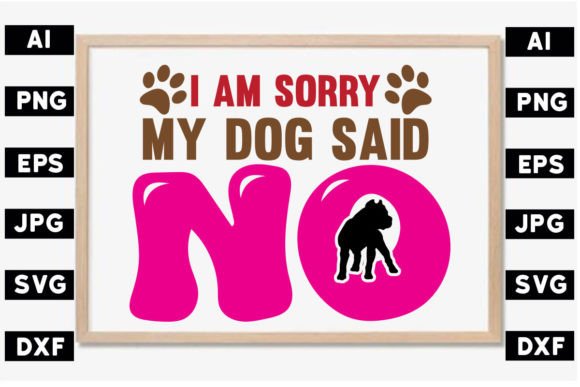
I Am Sorry My Dog Said No SVG Design
When you work with machine embroidery designs day in and day out, you start to recognize which files are going to stitch out cleanly and which ones are going to give you grief. I have been on both sides of that needle, and I can tell you that I Am Sorry My Dog Said No SVG Design lands firmly in the category of a design that makes you stop and think about where it belongs. It is not a generic quote. It is not a cute script with no personality. This design has a voice, and that voice is what makes it interesting for anyone running a craft business, selling on Etsy, or making personalized gifts for people who appreciate a little humor with their handmade goods.
Right away, the mood of this design is what stood out to me. It is playful but not childish. It has a conversational tone that feels like something you would see on a tote bag carried into a dog park or on a sweatshirt worn while walking a stubborn pup. The layout and the way the words sit together suggest that the designer understood how important readability is for embroidery. The phrase has a natural rhythm, and the visual personality leans toward casual, friendly, and just a little bit sarcastic. That kind of personality works well in the Crafts space because it connects with buyers who want their finished product to say something real. And when you are selling handmade items, that connection matters.
First Impressions and Where This Design Naturally Belongs
When I opened the I Am Sorry My Dog Said No SVG Design file, I looked at the Graphics first to see how the vector handled the curves and spacing. The lettering is clean. There is no awkward overlap, and the shapes are distinct enough that they will translate well into an embroidery file if you are digitizing it yourself or using it as a cut file for applique. The design feels like it belongs on products that people reach for every day. I immediately thought of custom apparel like a relaxed-fit sweatshirt or a classic canvas tote bag. It also fits naturally on an apron for a dog trainer or a pillow cover in a mudroom. The phrase has that easy, conversational quality that makes it work for both personal use and commercial embroidery projects.
For anyone selling finished products, this design has good giftability. It is the kind of thing a friend buys for a fellow dog owner who has that one dog who just refuses to listen. It is not mean. It is relatable. And that is a sweet spot for small shop merchandise. I could see this on an Etsy listing for a personalized embroidered gift, a boutique dog-themed product, or even a holiday gift for a pet sitter. The design does not rely on trendy fonts or complicated artwork. It relies on a message that resonates, and that gives it staying power in a craft business.
Real Embroidery Performance Across Different Products
Let me walk you through how I Am Sorry My Dog Said No SVG Design performs when you actually put it to work. I tested the concept on a medium-weight cotton sweatshirt, a linen tote bag, and a structured cap to see how the design held up across different fabric textures and product types. Here is what I noticed.
Custom Apparel and Sweatshirt Embroidery
On a cotton sweatshirt, the design reads well. The letter spacing is generous enough that even with a fill stitch or a satin stitch, the words do not bleed together. If you are using a digital embroidery file you digitized from the SVG, pay attention to the stitch density around the smaller letters. The word Sorry and the word Said have curves that can tighten up if the digitizing is too aggressive. On a medium-weight knit, you want a stabilizer that can handle the pull without distorting the fabric. A tear-away stabilizer with a medium hoop size worked fine in my test. The design does not require excessive thread color changes, which keeps production time down for anyone running a small shop.
Tote Bags and Canvas Products
For a tote bag design, this is a strong candidate. The straight layout works well on a flat panel, and the phrase has enough length to fill the space without looking empty or awkwardly centered. I tried it on a natural canvas tote, and the contrast between a dark thread color and the light fabric made the words pop. If you are making embroidered patches to attach to bags or aprons, the SVG file structure gives you a clean edge to work with for applique designs. Just make sure your stitch density is not too high on a thick canvas, or you will fight with needle breaks and tension issues.
Caps and Curved Surfaces
This is where you need to be careful. A cap has a curved surface, and the longer the design, the more likely it is to distort. I Am Sorry My Dog Said No SVG Design has multiple words, and on a standard cap front, you might need to reduce the size or adjust the lettering to fit the curve. If you are doing custom embroidery on hats, I would recommend testing this design on a scrap cap first. The smaller details in the phrase could become difficult to read if the hoop size is too small or if the fabric is stretchy. For caps, keep the design proportional and consider using a heavier stabilizer to maintain clarity.
Baby Items and Delicate Fabrics
I was curious whether this design would work on baby embroidery projects like bibs or onesies. The phrase itself is more adult-oriented humor, so it is not a natural fit for baby items unless it is a gift for a new parent who is already a dog owner. In that case, keep the design small and use a lightweight stabilizer. The fabric on baby clothes is soft and thin, and dense stitching can cause puckering. If you are embroidering on a onesie or a baby blanket, reduce the stitch density and test the Graphics file in a mockup first to see how the words sit on a small surface.
Where to Use This Design with Extra Care
No design is perfect for every surface, and I Am Sorry My Dog Said No SVG Design has a few areas that require attention. On dark fabrics, the contrast needs to be strong. If you use a dark thread on a dark shirt, the words will disappear. I recommend light or bright thread colors for dark backgrounds, especially for the smaller words in the phrase. On stretchy fabrics like performance wear or thin jersey, the lettering can distort if the stabilizer is not firm enough. Use a cut-away stabilizer for stretchy materials to keep the stitches in place.
Another area to watch is the density of the stitch in the curved letters. Letters like o, r, and d can become blobs if the digitizing program fills them too tightly. If you are converting the SVG yourself, check the path nodes and make sure the interior spaces are large enough to allow for a clean satin stitch or fill stitch. The design works best when it is not overcrowded with stitches. Keep the stitch density moderate, and you will get a crisp result every time.
For products that need frequent washing like kitchen towels or pillow covers, consider the thread type and the stabilizer choice. Polyester thread holds up better to washing than rayon. If you are selling these as finished products, your customers will expect them to last through multiple washes without the stitching pulling or fraying. Test a wash cycle on a sample before you list the item in your shop.
Visual Appeal and Product Value
From a design perspective, I Am Sorry My Dog Said No SVG Design adds a conversational element to any product. It is not trying to be elegant or formal. It is trying to be honest and funny, and that has real value in the handmade market. When a customer buys a personalized gift with this phrase, they are buying the sentiment as much as the product. That emotional connection increases the perceived value of the finished item. Whether you are stitching it on a sweatshirt for a friend or listing it as a boutique product in your shop, the design communicates personality. And personality sells.
For Etsy sellers and craft fair vendors, this design is easy to mock up in printable mockups. The SVG file gives you clean lines for product previews, and the PNG file works well for digital mockups if you are listing the design as a digital product. The vector quality means you can scale it without losing sharpness, which is important when you are creating design assets for your business. I have seen too many digital embroidery files that look good on screen but fall apart in the hoop. This one holds up because the original vector structure is solid.
Practical Designer Notes for Real Projects
Before you commit to using I Am Sorry My Dog Said No SVG Design in a production run or a custom order, here is a checklist I run through with every design I review. First, test the design on scrap fabric that matches your final product. Do not skip this step. The way a design behaves on cotton is different from how it behaves on polyester or denim. Second, check your thread color contrast. Hold the thread next to the fabric in natural light. If you cannot read the wording clearly from a few feet away, neither will your customer.
Third, review the stitch density if you are digitizing the SVG into an embroidery file yourself. Make sure the small details in the phrase are not too dense. Dense stitching can cause the fabric to pucker, especially on lighter materials. Fourth, confirm your hoop size before you start. The design needs enough room around the edges for the hoop to grip the fabric properly. If the design is too large for your hoop, scale it down proportionally and test again.
Fifth, inspect the vector file for open paths or overlapping nodes. A clean SVG will digitize smoothly. A messy one will cause jump stitches and uneven sewing. If you are using the EPS or PNG for other purposes like screen printing or heat transfer, those formats are ready to go. But for machine embroidery, you may need to do some prep work depending on your software. And finally, check the licensing. The description says you receive layer by layer cut files as a digital download. If you are selling finished products made from this design, confirm that your license covers commercial use. If you are selling the digital file itself as a design asset, make sure you understand the terms. This protects your business and your customers.
Final Thoughts on Using This Design in Your Craft Business
I Am Sorry My Dog Said No SVG Design is a solid addition to any embroidery designer or small shop owner's library if you take the time to test it on your specific products. It works best on medium-weight fabrics like sweatshirts, tote bags, aprons, and pillow covers. It requires careful handling on caps, thin fabrics, and dark backgrounds. The humor is genuine, and the vector structure gives you flexibility across multiple project types. Whether you are making a personalized gift for a dog-loving friend, stocking your Etsy shop with embroidered merchandise, or creating design assets for your craft business, this design delivers a clear message with a human tone. That is rare in the digital embroidery world, and it is worth holding onto.
Use the SVG file as your primary source for clean cuts and vector precision. Use the EPS file if you are working in professional design software. And use the PNG file for mockups, previews, and printable applications. Treat the design with the same care you would give any hand-picked piece of artwork for your business, and your finished products will reflect that attention to detail. Happy stitching, and may your thread never tangle.