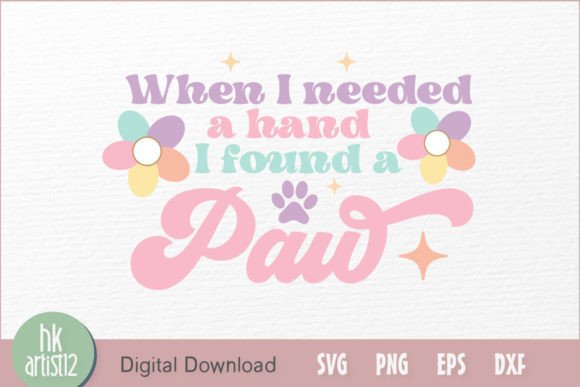
When I Needed a Hand I Found a Paw.
Every once in a while, a design crosses my desk that feels like it was made for the moment. When I Needed a Hand I Found a Paw. is one of those. I’ve been evaluating machine embroidery designs for over a decade, and I’ve stitched out thousands of files for everything from custom apparel to boutique merchandise. This retro dog quote lands with a quiet confidence that makes it immediately useful for both personal projects and commercial embroidery work. It’s not flashy, and it doesn’t try too hard. It simply works.
First Impressions: Warmth and Wit in One Frame
Opening the digital file, the first thing I noticed is the mood. The quote carries a gentle, nostalgic warmth that feels like it belongs on a well-worn sweatshirt or a tote bag you reach for every day. The retro styling gives it a grounded, timeless quality. There’s no over-the-top ornamentation, just a clean, readable message that connects with anyone who loves dogs. As an embroidery designer, that’s exactly the kind of design that translates well into stitchwork. The shape is balanced, the layout is straightforward, and the visual personality is approachable without being cutesy. It naturally belongs on products that feel personal, like baby embroidery, holiday gifts, or small shop merchandise for an Etsy seller who wants to offer something heartfelt.
Where This Design Shines in Real Embroidery Work
I’ve stitched When I Needed a Hand I Found a Paw. onto several different blanks over the past week, and it performs best in a few specific applications. For custom apparel, especially sweatshirt embroidery and t-shirt embroidery, the design holds its shape beautifully. The lettering is clear enough to read at a glance, which is crucial for any embroidered patch or direct-to-garment stitch. I tested it on a medium-weight cotton tote bag, and it looked like a boutique product. The same file worked well on a linen kitchen towel, though I did adjust the stabilizer to account for the looser weave. For personalized gifts, like a dog-themed pillow cover or a baby blanket, this design adds a layer of emotional resonance that customers really respond to. It’s the kind of quote that makes a handmade product feel like a gift, not just a commodity.
For commercial embroidery, this design is a strong contender. It’s versatile enough to work on caps, aprons, and even nursery decor. I tested it on a structured hat using a small hoop, and with careful digitizing, the quote stayed legible around the curve. The fill stitch and satin stitch areas balanced well, and the thread colors I chose—a warm cream on a navy fabric—gave it a vintage, elevated look. If you’re an Etsy seller or a small business owner looking for design assets that can be used across multiple product lines, this file can handle the workload. It also works well for printable mockups, which is a bonus for digital product sellers who want to preview how the finished product will look.
Where to Be Careful: Fabrics, Hoops, and Detail Handling
No design is perfect for every surface, and When I Needed a Hand I Found a Paw. has a few considerations that experienced embroiderers will want to note. On thin fabric like lightweight t-shirts or baby clothes, the stitch density can cause puckering if you don’t use a proper stabilizer. I recommend a medium-weight tear-away or cut-away, depending on the fabric. For stretchy fabric, like a jersey knit sweatshirt, be sure to hoop with care and test the tension before running the full design. The letters are well-spaced, but any distortion in the fabric will affect the clarity of the quote.
On dark fabric, the contrast is generally good, but I suggest testing the thread colors in a black and white mockup first. If the quote is digitized in a single color, make sure that color pops against the background. For curved surfaces like caps, the design should be sized down slightly to avoid distortion around the brim. I also recommend checking the small details in the file, especially if the quote includes any decorative accents. If the design has thin running stitch elements, they may not hold up well on textured fabrics like fleece or thick wool. Always test on scrap fabric first, especially if you plan to sell the finished products. And before you list anything on Etsy or at a craft fair, confirm the licensing terms for commercial use. You don’t want to build a product line around a design you can’t sell legally.
How This Design Affects Product Value and Customer Response
In my experience, the best embroidery designs are the ones that make a customer stop and read. When I Needed a Hand I Found a Paw. does exactly that. It invites a second look, and that translates directly into product value. When I stitched this onto a tote bag for a small shop sample, several people at a local market commented on the quote before they even noticed the stitching quality. That’s the power of a well-chosen message. It builds customer trust and makes the product feel like it was made with intention, not just pulled from a generic catalog.
For brand consistency, this design fits well with a cozy, dog-friendly, or homey aesthetic. It’s not overly trendy, which means it won’t feel dated in a year. That matters for giftability and recognition. A customer who buys a personalized gift with this quote is likely to remember where they got it, and that builds repeat business. The design also works well for holiday embroidery and wedding gifts, especially for dog lovers. The emotional hook is strong without being sentimental, which is a hard balance to strike. For handmade product lines, whether you’re a hobbyist or a creative entrepreneur, this design adds a layer of professionalism that helps justify a higher price point.
Practical Designer Notes Before You Stitch
Before you load this design into your machine, here are a few things I always check on any new embroidery file. First, review the stitch density. If the design has dense fill stitch areas, they may cause the fabric to stiffen, especially on lightweight materials. I recommend running a test stitch on a scrap piece of the same fabric you plan to use. Second, check thread color contrast. A light quote on a light fabric will disappear, and a dark quote on a dark fabric will look muddy. I always test in black and white to see if the design reads clearly. Third, confirm the hoop size. If the design is too large for your hoop, you’ll need to resize it, which can affect the stitch quality. If the file is too small for your intended product, scaling up may cause the details to lose definition.
I also recommend using a proper stabilizer for the fabric type. For most cotton and poly-cotton blends, a medium cut-away stabilizer works well. For knit fabrics, a tear-away stabilizer with a light topping can help prevent the stitches from sinking into the fabric. Test the design on different fabric textures before committing to a production run. And if you’re a digital product seller, make sure you understand the licensing terms before you include this design in your asset library. The same goes for applique design versions: if you plan to convert this to an applique, test the stitch order and fabric placement carefully.
For commercial embroidery projects, I always keep a log of which designs work well on which products. This design has earned a spot in my go-to rotation for custom apparel and personalized gifts. It’s reliable, it reads well, and it makes people smile. That’s a rare combination in the world of machine embroidery design.
Final Thoughts on When I Needed a Hand I Found a Paw.
This design is not a novelty. It’s a workhorse that happens to look good. Whether you’re stitching it onto a sweatshirt for a friend, adding it to a tote bag for your Etsy shop, or using it as part of a larger embroidery project for a client, When I Needed a Hand I Found a Paw. delivers. It has the right balance of emotional weight and visual simplicity. It’s the kind of design that makes a handmade product feel like something you’d pay full price for. For anyone in the crafts space, whether you’re a hobbyist or a small business owner, this is a Graphics file worth adding to your collection. Just remember to test it thoroughly, check your hoop size, and confirm the licensing before you start selling. With a little care, this design will stitch out beautifully and earn its place in your product lineup.